
Events
Humanities Research 2.0: Digital Methods, Publishing Trends and New Ethical Directions
May, 2026
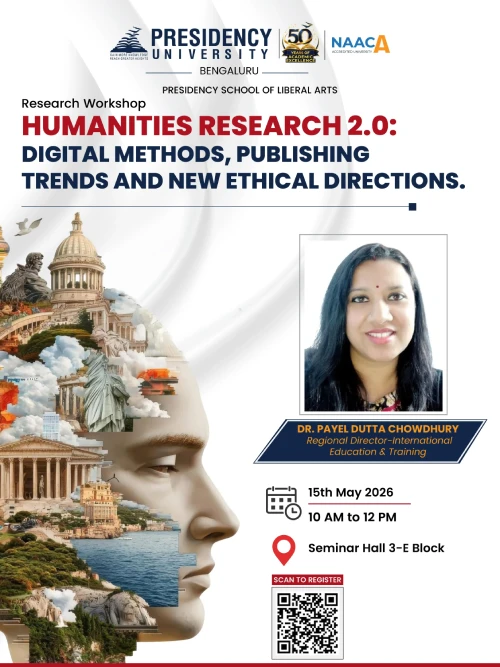
The workshop on Humanities Research 2.0: Digital Methods, Publishing Trends and New Ethical Directions provided valuable insights into the paradigm shift in humanities research through the integration of computational methods, text analysis, and data mapping techniques for analysing large datasets. The session explored the transition from traditional humanities methodologies towards technology-driven, multimodal, and ethically conscious research frameworks in the digital age.
The workshop introduced cutting-edge paradigms that bridge spatial theory, cultural demographics, and public engagement. Discussions on Immersive Spatiality highlighted how digital mapping, spatial computing, and virtual environments are redefining our understanding of historical, literary, and cultural landscapes. The session also examined the analysis of quantified cultural data through a demographic lens, ensuring that marginalised narratives and regional identities are systematically represented rather than overlooked through data aggregation.
A key focus of the workshop was Humanities Engagement, which emphasised activating public scholarship through digital platforms to make humanities research more accessible, participatory, and impactful beyond the traditional academic sphere.
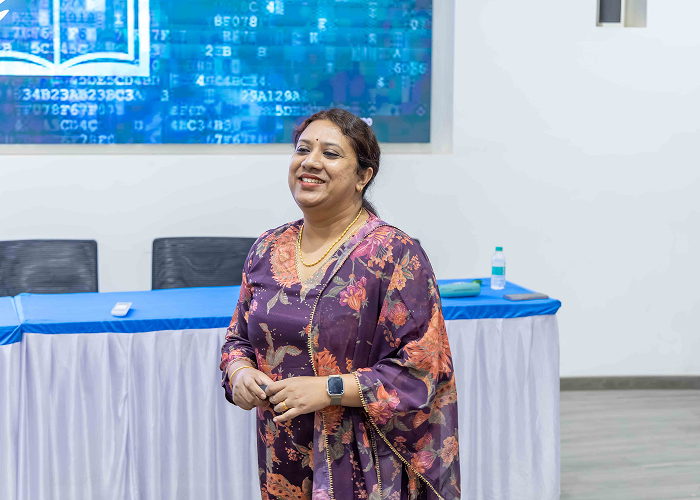
Addressing publication requirements, the speaker outlined three essential components for successful research publication. The first, Advanced Digital Workflows, focused on streamlining the research pipeline from data collection to synthesis through automated transcription, digital archiving, and text-mining systems that enable researchers to manage extensive corpora efficiently. The second, Open Access Knowledge Ecosystems, highlighted the importance of moving beyond restrictive paywalls towards collaborative and democratic knowledge-sharing practices, including the strategic use of preprint repositories to accelerate dissemination, encourage peer feedback, and maximise citation impact. The third component, The Emergence of AI Data Ethics, addressed the complex ethical challenges arising from artificial intelligence, including algorithmic bias, intellectual property concerns in the age of generative models, data sovereignty, and the responsible application of AI in cultural analysis.
The workshop further demonstrated how advanced computational software and language frameworks function as analytical catalysts across multidisciplinary fields. Large Language Models (LLMs) and Claude AI were presented as tools for rapid text interrogation, literature synthesis, and the development of comparative frameworks across extensive literary and philosophical texts. Natural Language Processing (NLP) techniques were discussed in relation to sentiment analysis, thematic mapping, and stylistic profiling, helping to overcome language barriers in cross-cultural studies. In addition, the concept of Digital Humanitisation for Data Interpretation emphasised the importance of translating quantitative computational data into meaningful qualitative human narratives, ensuring that human perspectives remain central to data analytics.
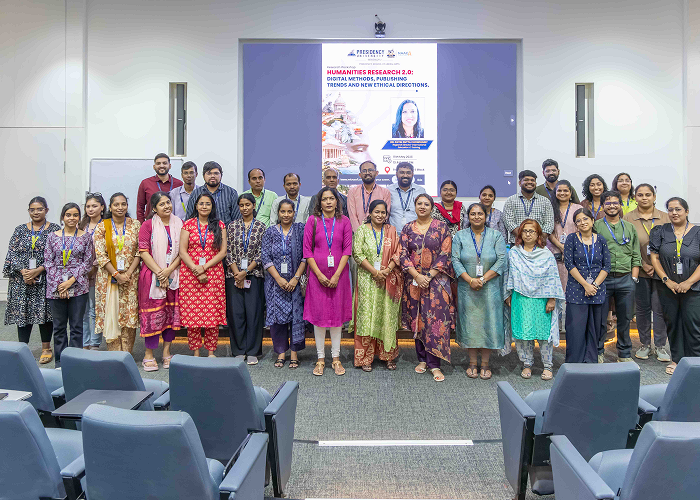
The event witnessed enthusiastic participation, with more than 100 attendees joining both offline and online. Participants gained exposure to emerging concepts in academic publishing and acquired practical knowledge of contemporary digital tools shaping the present research and publishing landscape.


 +91 9022092222
 admission@presidencyuniversity.in
 Rajanukunte, Yelahanka, Bengaluru, Karnataka, Pin: 560119, India
 +91 9022092222