
Events
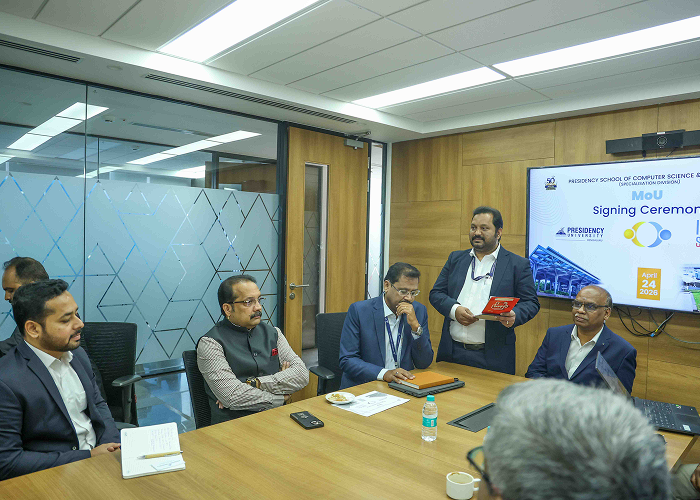
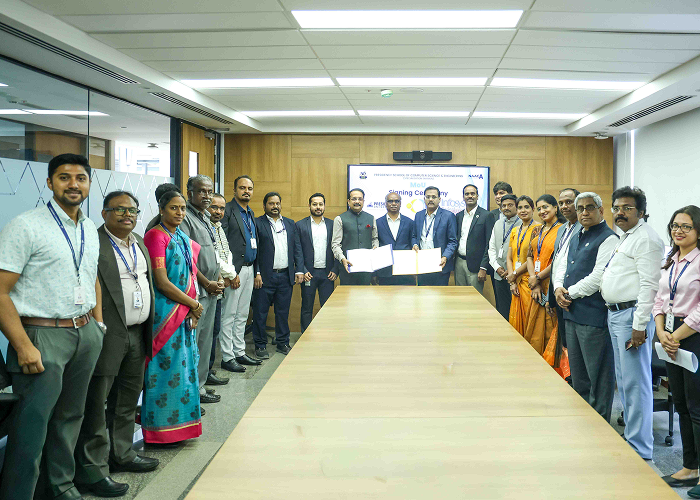
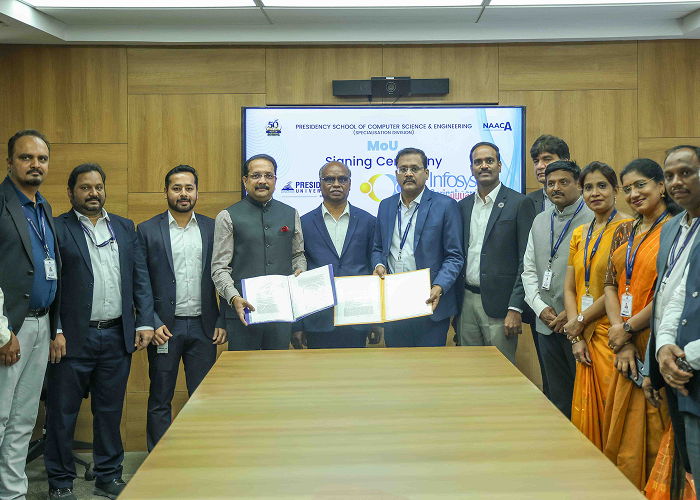
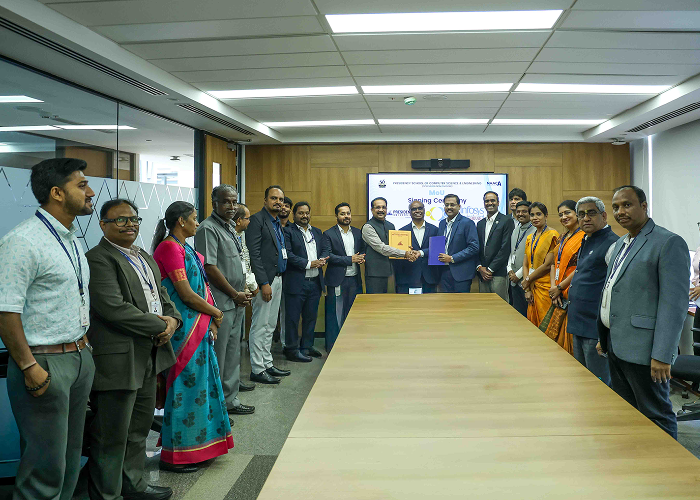
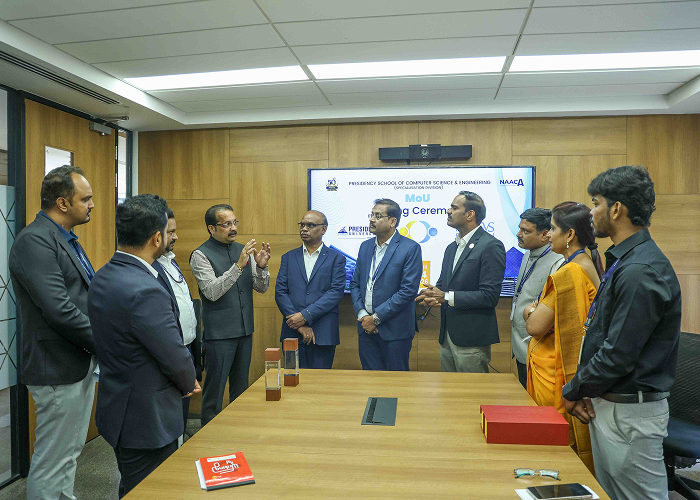
PSOCSE Strengthens Industry Collaboration with Infosys Springboard MoU
April, 2026
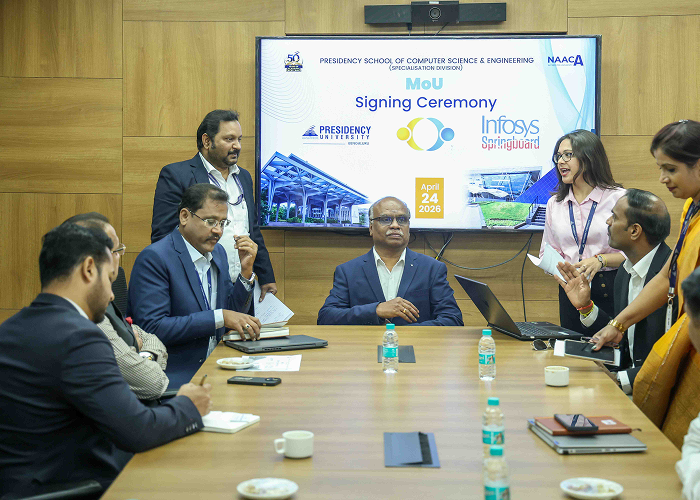
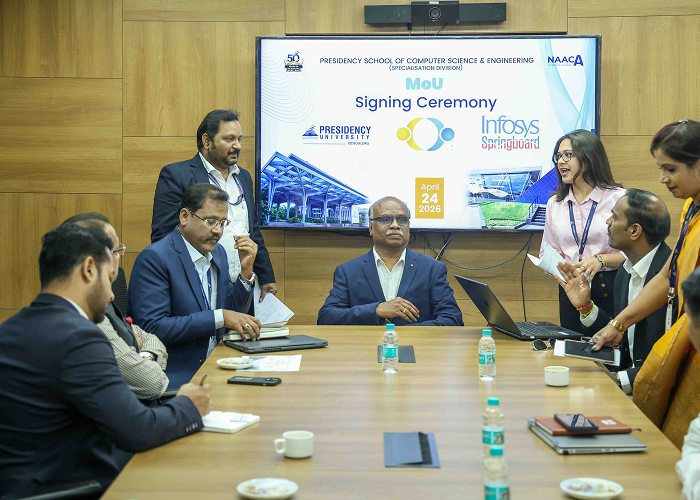
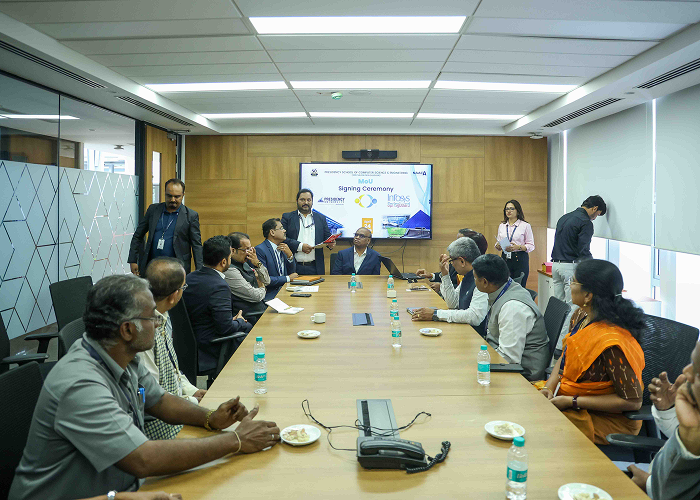
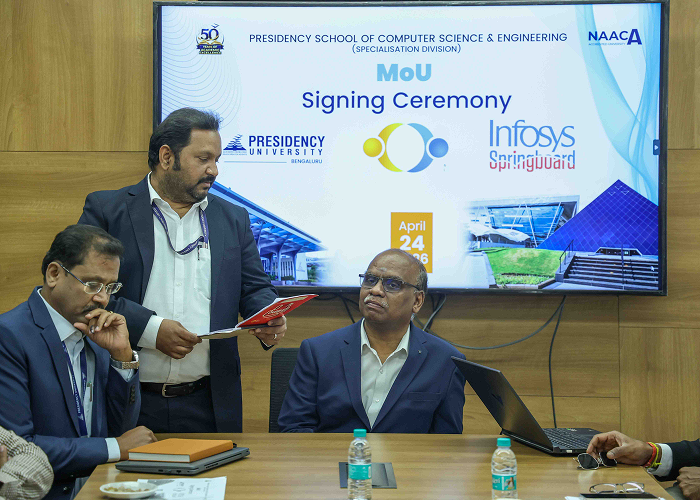
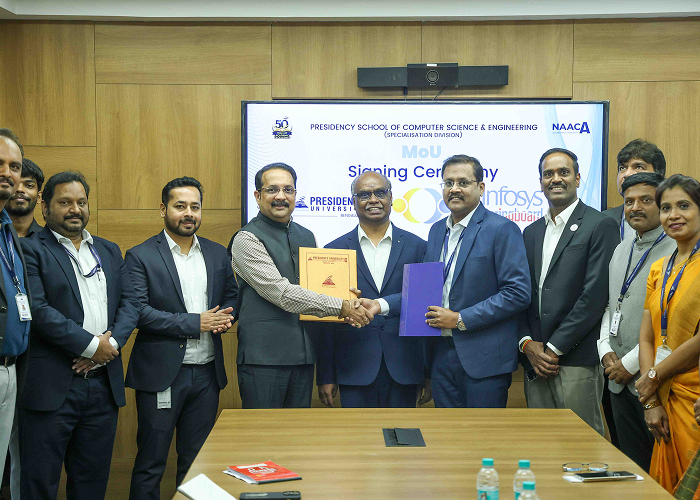
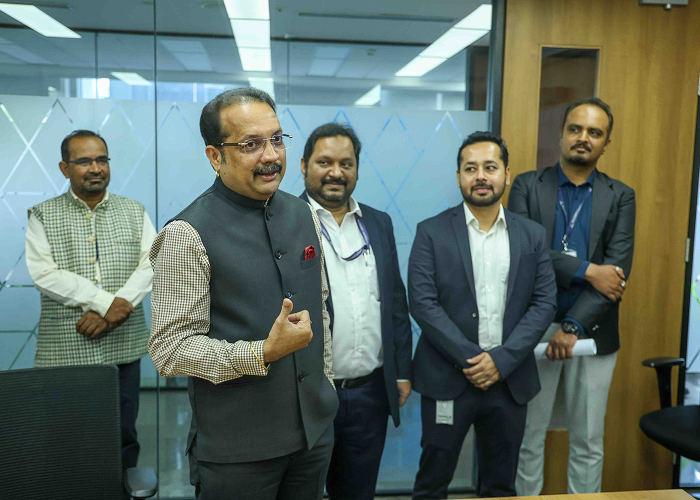
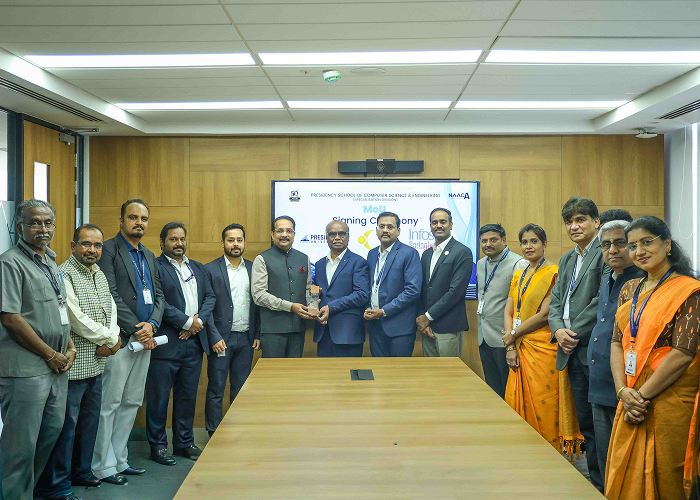
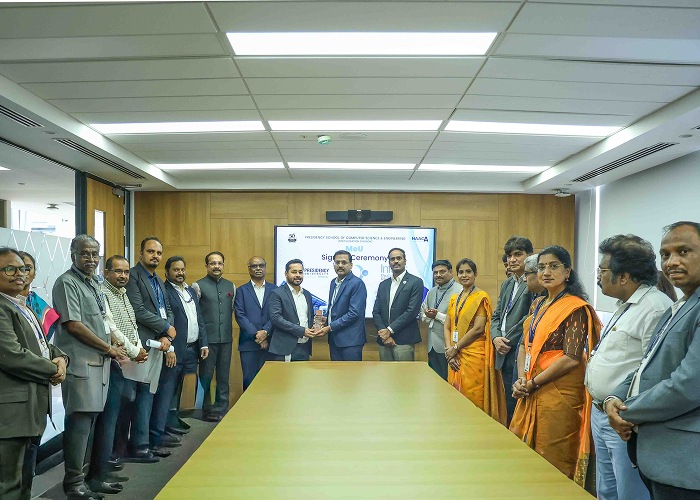
The Presidency School of Computer Science and Engineering (Specialisation Division) has successfully signed a Memorandum of Understanding (MoU) with Infosys Limited through its Infosys Springboard initiative, marking a significant milestone in strengthening academia–industry collaboration.
This partnership establishes a robust framework between Presidency University and Infosys Limited to promote digital learning, innovation, and industry-aligned skill development. The collaboration focuses on enabling students and faculty to access advanced learning resources, certification programmes, and industry-relevant training via the Infosys Springboard platform.
The MoU was signed in the presence of esteemed dignitaries:
- Dr Thiruvengadam – Vice-Chancellor
- Dr Sivaperumal S. – Pro Vice-Chancellor
- Dr Venkateswaran S. – Registrar
- Dr Shakkeera L. – Associate Dean, PSCS (Spl)
- Dr Zafar Ali Khan N. – HoD, PSCS (Spl)
- Robin Rohit Vincent – Head, NVIDIA CoE, PSCS (Spl)
- Dr Anandaraj S. P. – HoD, PSCS (Spl)
- Dr Alamelu Mangai Jothidurai – Professor, PSCS (Spl)
- Dr Mohammed Mujeerulla – Associate Professor, PSCS (Spl)
along with faculty members.
The delegation from Infosys Limited included:
- Mr Santhosh Ananthapura – Associate Vice-President
- Mr Vinay Vasanth – Specialist, Learning (ETA), Infosys Limited
The initiative was successfully coordinated by:
- Mr Likhith S. R. – Assistant Professor, PSCS (Spl)
- Ms Priyanki Dutta – Assistant Professor, PSCS (Spl)
Key Highlights:
- Formal signing of the MoU between Presidency University and Infosys Springboard
- Access to the Infosys Springboard platform for students and faculty
- Opportunities for certification programmes, digital courses, and skill-based training
- Promotion of industry-aligned learning and experiential education
Impact for Students:
This collaboration significantly enhances student learning by providing access to industry-oriented digital resources, fostering technical and professional skill development, and expanding opportunities for certifications and continuous learning. It further strengthens the university’s commitment to digital transformation, experiential learning, and building a future-ready academic ecosystem aligned with industry needs.


 +91 9022092222
 admission@presidencyuniversity.in
 Rajanukunte, Yelahanka, Bengaluru, Karnataka, Pin: 560119, India
 +91 9022092222