The Distracted Learners: Engaging the Generation Z in Allied Health Classrooms

BY DR. RICHA SINGH (PT), ASSISTANT PROFESSOR, PRESIDENCY SCHOOL OF ALLIED HEALTH SCIENCES
It is a third time in these two weeks, that I was in the middle of a theory class post lunch amidst the hot summer, that I found half the students in my class have already diverged to a different world. Eyes gazed at me with no purpose, postures went slack, some heads already on the table, some staring hopefully on a wall clock behind me to tick towards the end of the endless fable I was up to, which made me think: “Is it about us, or them?”
To mention – Genz Z(s) is anyone born between 1997 and 2012 – almost fills up our class attendance logs these days, by any means, they happen to be the most natural digitally immersive and dependent generation in the history. They have crawled to walked in an environment that gives them instant assertion of their existence, rewarded as “comments and likes” on an average of three social media platforms per day. This haste for attention is bringing their average attention span from the optimum 12 seconds to 8 seconds as per studies. In total, expecting students in Generation Z to quietly attend a 50 – 55 mins of a lecture just remains an on-paper expected outcome of a good pedagogical strategy.
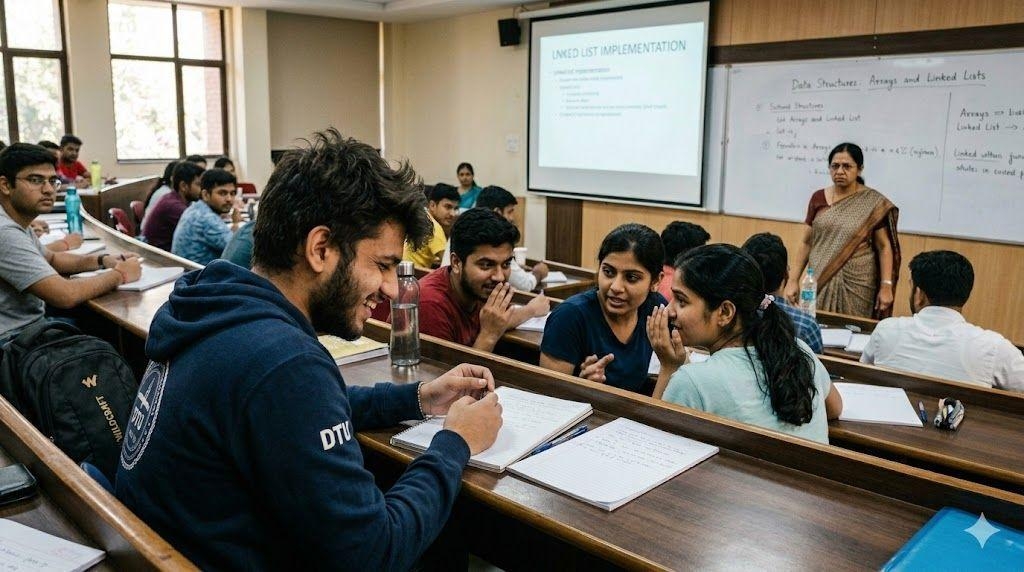
Understanding the wiring behind
Reading until this part of my blog, the readers must have definitely taken up the Generation Z(s) in a certain way. Much before they are believed to be in some way, I want readers to deem the neuroscience behind. When the mind seeks assertion, a genuinely shorter attention span is the conditioning. Research also supports the fact that unidirectional flow of any type of energy fails to keep the prefrontal cortex engaged all the time, which the lecturers often describe as inattentiveness. This cannot be considered, at all, like a flaw of character, this is just a conditioning, that can be worked with.
From the point of view of Allied Health – where flaws are a bane and non-negotiable as a behaviour, disengagement is unaffordable at all. A student who zones out at an exercise therapy mobilisation lecture today, may hesitate to treat cases of fractures tomorrow at the clinic. This behaviour, as a belief, has taken up most of our classes
What is it that Genz will look up to – if not a boring lecture
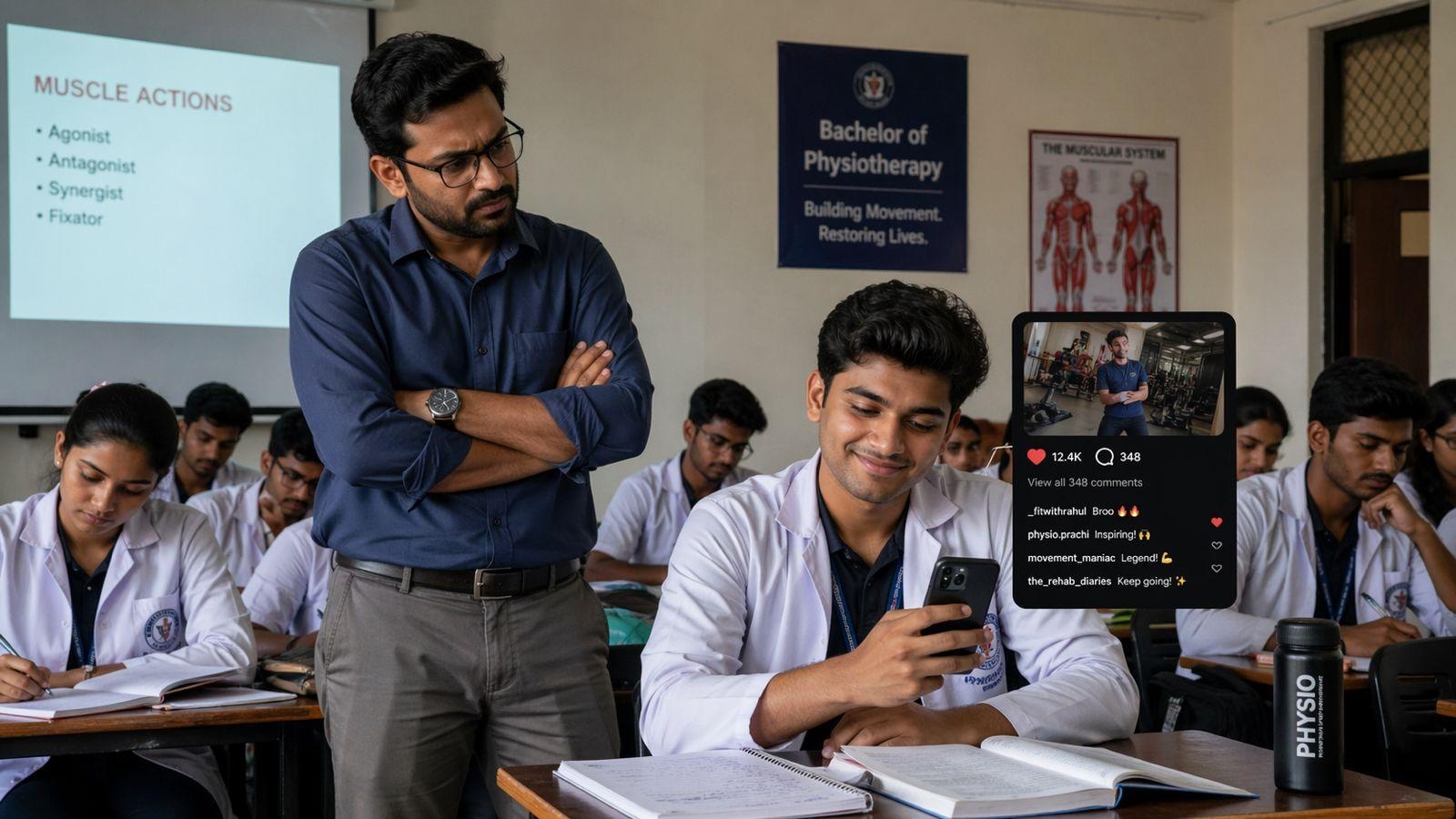
These days, everything is algorithm bound. It has come to my notice that during my Anatomy class, the students are more deeply connected when I tell them the applied clinical relevance of a muscle rather than how a muscle settles on a bone. Or for a class on Electrical Physiotherapy Machines, they are more rooted in a class on “how the machine works?” rather than on “why does it work their way?”. In a pharmacology class, they are more interested in what lethal dosage killed a patient, rather than what it did to his body?
These minds have a kind of agency and ownership. They choose to curate the content, or their “feed” for instance, just like for Instagram, whereas a bulky lecture of ours with fully laden slides, snatches this sense of ownership, and hence, passive instruction fails to sum up in the exam. To restore a sense of investment, an argument on a clinical rationale, or teaching back to peer can help, as in allied health classrooms.
The Five Full model – An investment
What can actually help your subject content become their favourite is all backed by evidence. The better a chunk of food is plated, the more pleasing it is. Some of the ways that I believe can redirect even the most inattentive student’s neurons to your words, are all of my own experiences.
- The first 5 minutes: Create a strong hook in your initial lines: You may start an Anatomy class with a shocking incident or stat, like “A single injury to a 1–2 cm segment of your spinal cord can change your entire life forever” immediately takes the students along. Remember to never start your class with an admin work, this tells your students what’s coming up for them.
- Pose a clinical scenario: You may start your class like: “A 60-year-old comes to your clinic with excruciating pain in her right knee, what will be your first step?” or “A 14 year old boy falls while playing football, he comes to your clinic with a severely swollen ankle, you have to make three decisions, write them down before I start today’s class on applications on analgesic effects of TENS machine”. This primes their brains for more information and keeps them rooted to the class.
- Think – Pair - Share: After you have taught a topic, you can ask the students a case – based question, then give them some time to think individually, after 5 minutes let them discuss with some student sitting next, further make groups and let them discuss their ideas. Even the most distracted students in your class cooperate to your surprise.
- Spot the error: Show them a procedure done wrongly, after you have completed that topic. Ask them to spot the mistakes, make them tell you what could happen if that wrong step is ignored. This can work brilliantly for your practical/clinical sessions.
- 60 – Second Paper: At the end of the session, ask your students to write any 10 points that they have retained from the day’s class. Day through day you will be able to see progress and do not forget to challenge your students for more points. Writing more points definitely invites more attention to your class.
“The best faculty do not have fewer distracted students. They have more re-engaged ones.”


 +91 9022092222
 admission@presidencyuniversity.in
 Rajanukunte, Yelahanka, Bengaluru, Karnataka, Pin: 560119, India
 +91 9022092222