How to Become a Radiologist in India: Steps and Courses
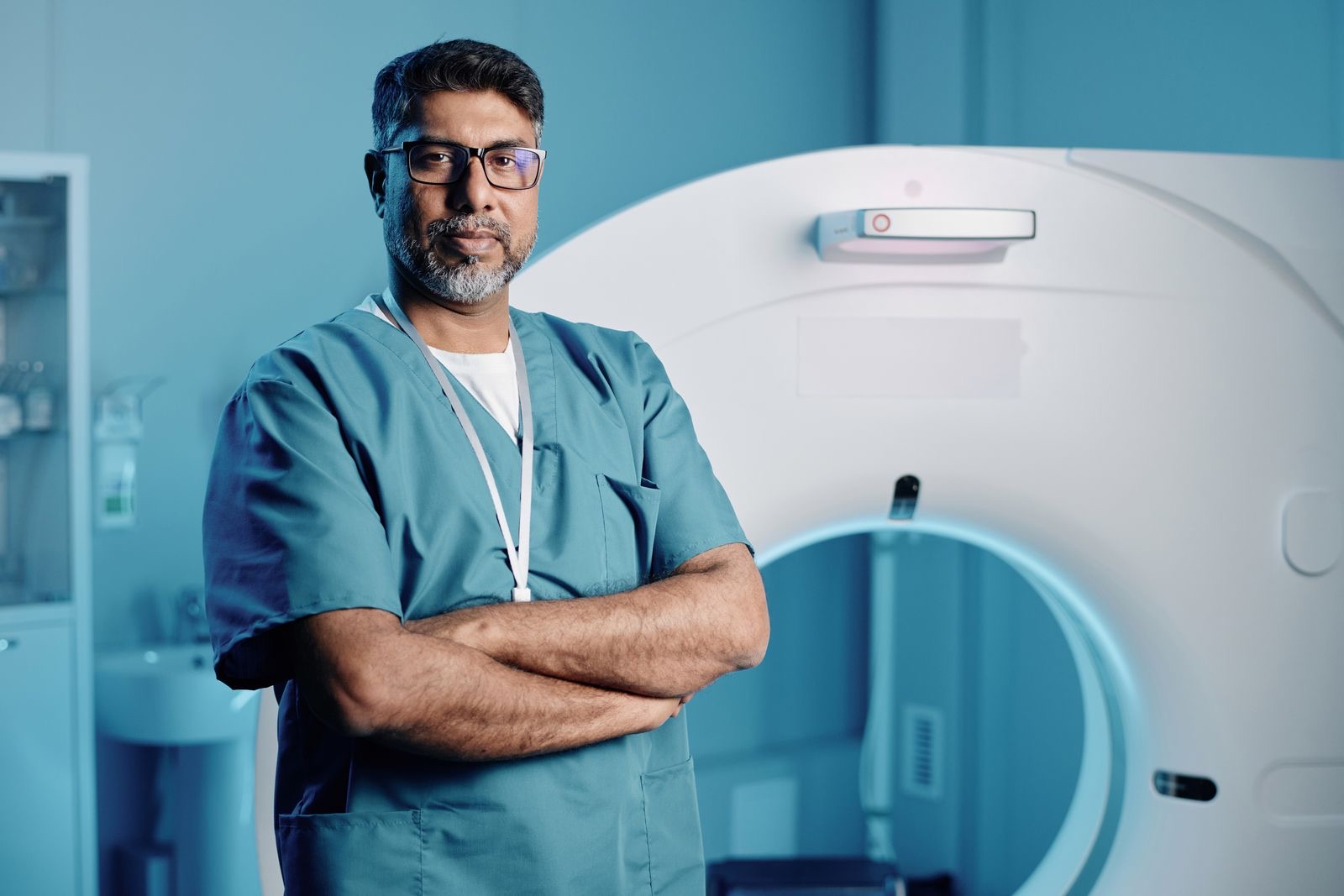
If you enjoy biology and like the idea of solving medical puzzles from scans, radiology can look like an attractive specialisation. Many students, though, are not sure whether they need to become a doctor first, or whether a radiology course after Class 12 is enough. The short answer: a radiologist is a doctor. This guide explains how to become a radiologist in India step by step, how long it takes and how the role differs from that of a radiology technologist.
What does a radiologist do?
A radiologist is a medical specialist who interprets X-rays, CT scans, MRI, ultrasound and other imaging to diagnose disease and guide treatment. The work includes:
- Diagnostic imaging and reporting: reading scans, comparing them with earlier studies and writing reports that other doctors rely on
- Procedures: performing ultrasound examinations and, in interventional radiology, image-guided biopsies, drainages and treatments through blood vessels
- Clinical collaboration: advising surgeons, physicians and oncologists on cases and on which test suits a clinical question
- Safety: protecting patients and staff from unnecessary radiation and choosing the right protocol for each scan
Eligibility after Class 10 and 12
After Class 10, choose the science stream with Physics, Chemistry and Biology (PCB). There is no shortcut that skips medical school.
To sit NEET-UG, the NEET-UG 2026 information bulletin requires Class 12 with Physics, Chemistry, Biology or Biotechnology and English, and a minimum age of 17 on or before 31 December of the exam year. There is no upper age limit. To qualify, candidates need marks at the 50th percentile (40th for SC, ST and OBC candidates; 45th for general-category candidates with disabilities), and states add their own eligibility rules for state-quota seats.
Step-by-step path to becoming a radiologist
1. Qualify NEET-UG and complete MBBS. NEET-UG, conducted by the National Testing Agency, is the single entrance test for MBBS. Seats are filled through counselling: the Medical Counselling Committee handles all-India quota, central and deemed university seats, while state authorities such as the Karnataka Examinations Authority handle state quotas. Under the National Medical Commission’s (NMC) graduate regulations, MBBS takes four and a half academic years.
2. Finish the internship and register. After the final examination, you complete a 12-month compulsory rotating medical internship across departments. You can then register with your State Medical Council and the National Medical Commission system, which allows you to practise as a doctor.
3. Qualify NEET-PG and train in radiology. Specialist seats are allotted through NEET-PG, conducted by the National Board of Examinations in Medical Sciences (NBEMS). Radiology (radiodiagnosis) is a sought-after branch, so you need a strong rank. The NMC Act provides for a National Exit Test (NExT) to replace NEET-PG in future, but as of October 2026 it has not been introduced, so check the NMC website for the rules that apply to your batch.
4. Complete specialist training and optional fellowships. After three years of MD or DNB residency (or a two-year diploma) and the final examination, you are a qualified radiologist. Many then add a fellowship in a subspecialty.
Radiology courses after MBBS
Course | Awarded by | Duration | Notes |
MD Radiodiagnosis | Universities, under NMC regulations | 3 years | Residency with teaching, research and examinations |
DNB Radiodiagnosis | NBEMS, in accredited hospitals | 3 years | Recognised postgraduate specialist qualification |
DMRD (NBEMS diploma) | NBEMS | 2 years | Post-MBBS diploma in medical radio-diagnosis |
Fellowships and super-speciality courses | Institutions and NBEMS | 1–3 years | For example interventional radiology or neuroradiology |
So the MD or DNB route takes roughly eight and a half years after Class 12: five and a half for MBBS and internship, then three for the postgraduate degree. The diploma route is a year shorter. Time spent preparing for NEET-PG and fellowships can add more.
Radiologist vs radiology technologist
These are two different careers, and students often confuse them when searching for “radiology courses after 12th”.
Point | Radiologist | Radiology technologist (radiographer) |
Education | MBBS plus MD, DNB or diploma in radiology | Four-year Bachelor of Medical Radiology and Imaging Technology (B.MRIT) or equivalent |
Entrance | NEET-UG, then NEET-PG | University or state admission process |
Responsibility | Interprets images, writes diagnostic reports, performs interventional procedures | Positions patients, operates X-ray, CT and MRI equipment, applies radiation protection |
Regulator | NMC | NCAHP (allied and healthcare professions) |
Total study time | About 7.5–8.5 years or more | Four years |
If you want to work with imaging technology without the medical route, the B.MRIT at Presidency University is a four-year programme covering X-ray, CT, MRI, ultrasound and nuclear medicine, radiographic positioning and radiation protection. Its page lists 50% in Class 12 with Physics, Chemistry, Biology and English. It trains technologists, not radiologists, and does not lead to a medical degree. Our guide to paramedical courses after 12th compares other allied-health options.
Skills required
- Strong clinical knowledge of anatomy, physiology and disease
- Visual pattern recognition and attention to small details over long reading sessions
- Clear report writing, because a vague report can delay treatment
- Comfort with technology, including newer AI-assisted reporting tools
- Calm communication with patients during procedures and with colleagues under time pressure
Career options for radiologists
Radiologists work in government and private hospitals, standalone diagnostic centres and teleradiology services that report scans remotely. Others teach in medical colleges, which requires a postgraduate qualification and the NMC’s faculty norms, or move into research. Subspecialties include neuroradiology, musculoskeletal, paediatric, breast, cardiac and interventional radiology.
Frequently asked questions
How many years does it take to become a radiologist?
About eight and a half years after Class 12 through MD or DNB: four and a half years of MBBS, a one-year internship and three years of postgraduate training. The two-year NBEMS diploma route is a year shorter. Fellowships add one to three years.
Is NEET compulsory to become a radiologist in India?
Yes. NEET-UG is required for MBBS, and NEET-PG is currently required for MD or DNB radiology seats.
What should I study after Class 12 to become a radiologist?
Take MBBS through NEET-UG. A B.MRIT or other imaging degree trains you as a technologist, not as a radiologist.
What is the difference between a radiologist and a radiographer?
A radiologist is a doctor who interprets images and makes diagnoses. A radiographer or radiology technologist performs the scans and looks after equipment and radiation safety.
Which radiology specialisations are available after postgraduate training?
Neuroradiology, interventional radiology, musculoskeletal, paediatric, breast, cardiac and abdominal imaging, through fellowships or super-speciality courses.
Conclusion
Becoming a radiologist is a long medical path: PCB in Class 12, NEET-UG, MBBS, internship, NEET-PG and two to three years of specialist training. Before you commit, check the current NEET-UG bulletin, NMC regulations and NBEMS notices for your year. If you prefer hands-on imaging work in four years, explore the Presidency School of Allied and Healthcare Professions and its B.MRIT programme instead.


 +91 9022092222
 admission@presidencyuniversity.in
 Rajanukunte, Yelahanka, Bengaluru, Karnataka, Pin: 560119, India

 +91 9022092222