Exploring Design Perspectives: Our Visit to Bangalore Creative Circus
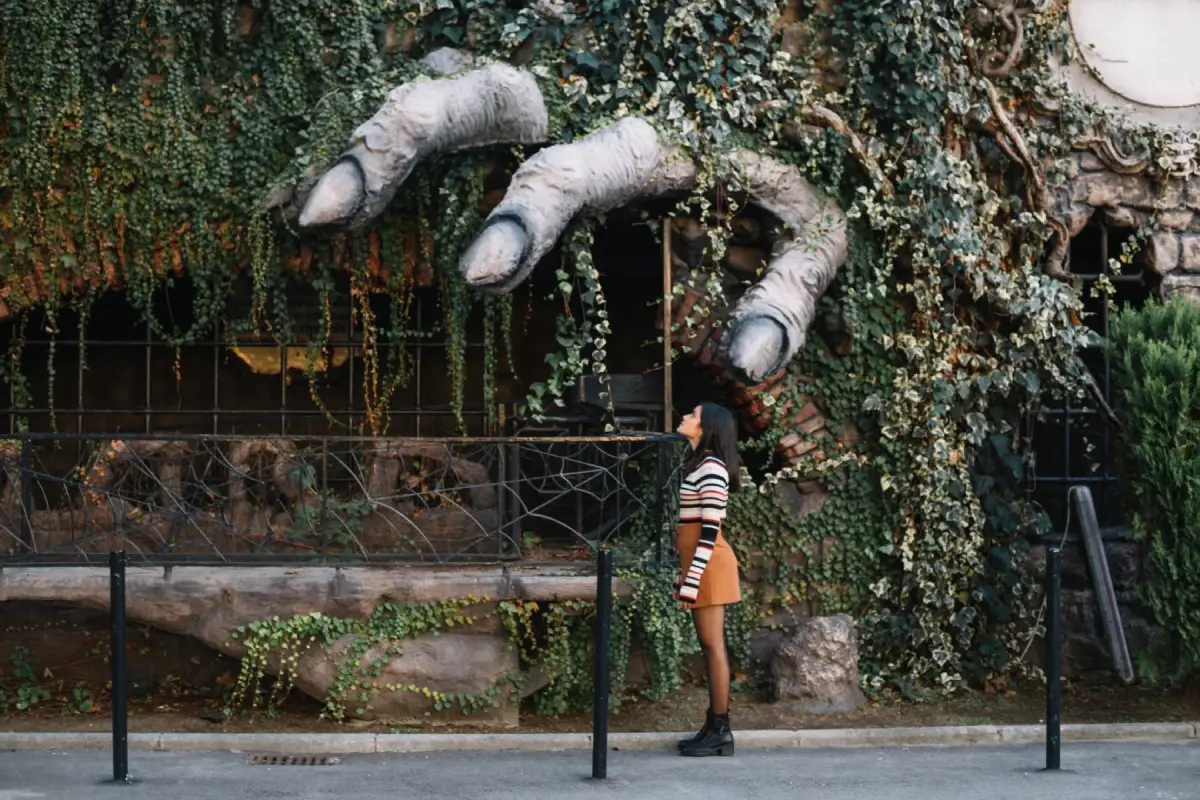
“Some experiences don't stand out immediately, they build slowly”
You walk in thinking it's just another academic requirement, and somewhere along the way, you realise you've started observing more than usual.
Our visit to Bangalore Creative Circus was like that.
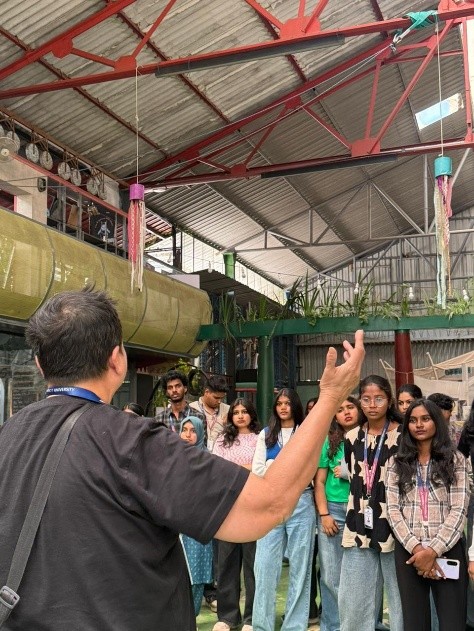
Organised as an industrial visit for all foundation students from the B. Des course, it brought together students from different design disciplines into one shared space. At first, it felt like something routine, another visit outside the classroom. But the experience turned out to be far from typical.
I'm Haya Hussain, a second semester foundation student, still in the process of understanding what design really means to me. At this stage, everything feels like a mix of curiosity and confusion, learning new concepts while also trying to figure out what I naturally connect with.
This visit became one of those moments where observation felt more important than trying to find the "right" answers.
From the moment we entered BCC, the space felt different. It wasn't structured in a way that guided us step by step. There were no fixed paths or detailed explanations telling us what to focus on. Instead, it felt open, allowing us to explore and interpret things at our own pace.
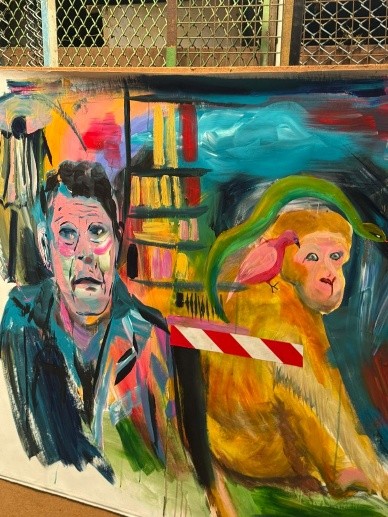
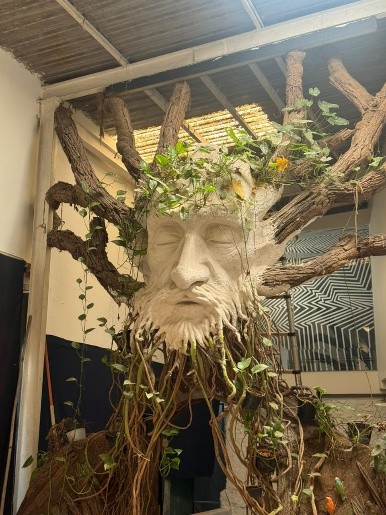
The environment itself had a very raw and experimental quality. Unlike typical curated spaces, this didn't feel overly polished. There were installations made using materials like wood, metal, fabric, and recycled elements. Some structures appeared unfinished at first glance, but spending more time around them made it clear that the process was just a s important as the outcome. Certain areas had arrangements that didn't immediately make sense. Objects were placed in ways that made you pause and look again. Some sections were minimal, with very few elements, while others were layered and complex. This contrast created a rhythm within the space, where you moved from simplicity to density without even realising it.
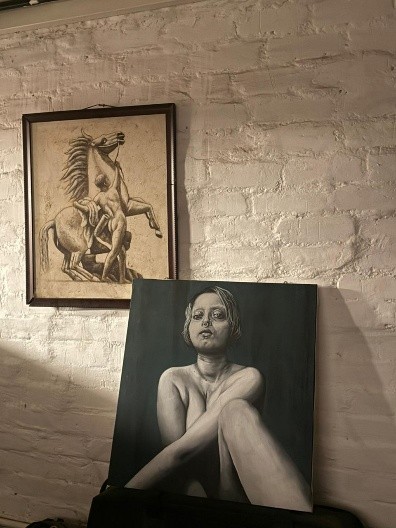
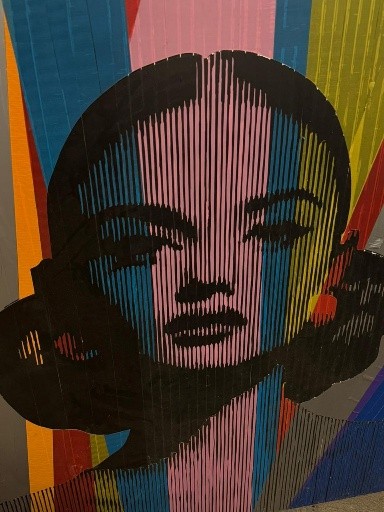
Lighting played a significant role in shaping the experience. Natural light entered through openings and interacted with surfaces, creating shadows and highlights that kept changing as we moved. In some areas, textures became more visible only because of how the light fell on them. It showed how something as simple a s lighting can influence the way a space is perceived.
Scale was another interesting aspect. Some installations felt large and imposing, making you more aware of your own presence within the space, while others were smaller and more detailed, requiring you to come closer and observe carefully. This constant shift in scale kept the experience engaging. The visit also became more meaningful because of the people I experienced it with. Since we all come from different design disciplines, everyone noticed different things. Product design students focused on construction and materials, communication design students looked at composition and visual balance, while others paid attention to textures, layering, or spatial experience. Even though we were all in the same place, our interpretations.
Personally, I found myself noticing smaller, quieter details, the kind that are easy to overlook. How certain objects were placed without feeling forced, how empty spaces didn't feel unnecessary, and how movement through the space felt natural rather than directed. These weren't things that stood out instantly, but they stayed with me after.
aspect was the lack of over explanation. There were no long descriptions or instructions telling us what to think. At first, this felt slightly unclear, but it gradually made the experience more personal. It allowed each of us to form our own understanding instead of relying on a fixed interpretation.
As foundation students, we are constantly introduced to design principles like form, balance, contrast, and function. In the classroom, these exist as concepts. At BCC, they became visible and experiential. It wasn't about identifying them perfectly, but about recognising how they exist in real spaces. Overall, the visit didn't feel like a typical industrial requirement. It felt more like an open-ended learning experience where observation mattered more than conclusions. There was no single takeaway, and that's what made it meaningful. It didn't give us clear answers, but it made us more aware of how design exists around u s and how differently it can be perceived.
Looking back, the visit wasn't just about what was there. It was about what we chose to notice.
Haya Hussain
20251BDS0027
B. Des Foundation
School Of Design
Presidency University


 +91 9022092222
 admission@presidencyuniversity.in
 Rajanukunte, Yelahanka, Bengaluru, Karnataka, Pin: 560119, India
 +91 9022092222