BFA Course Details: Eligibility, Syllabus and Careers
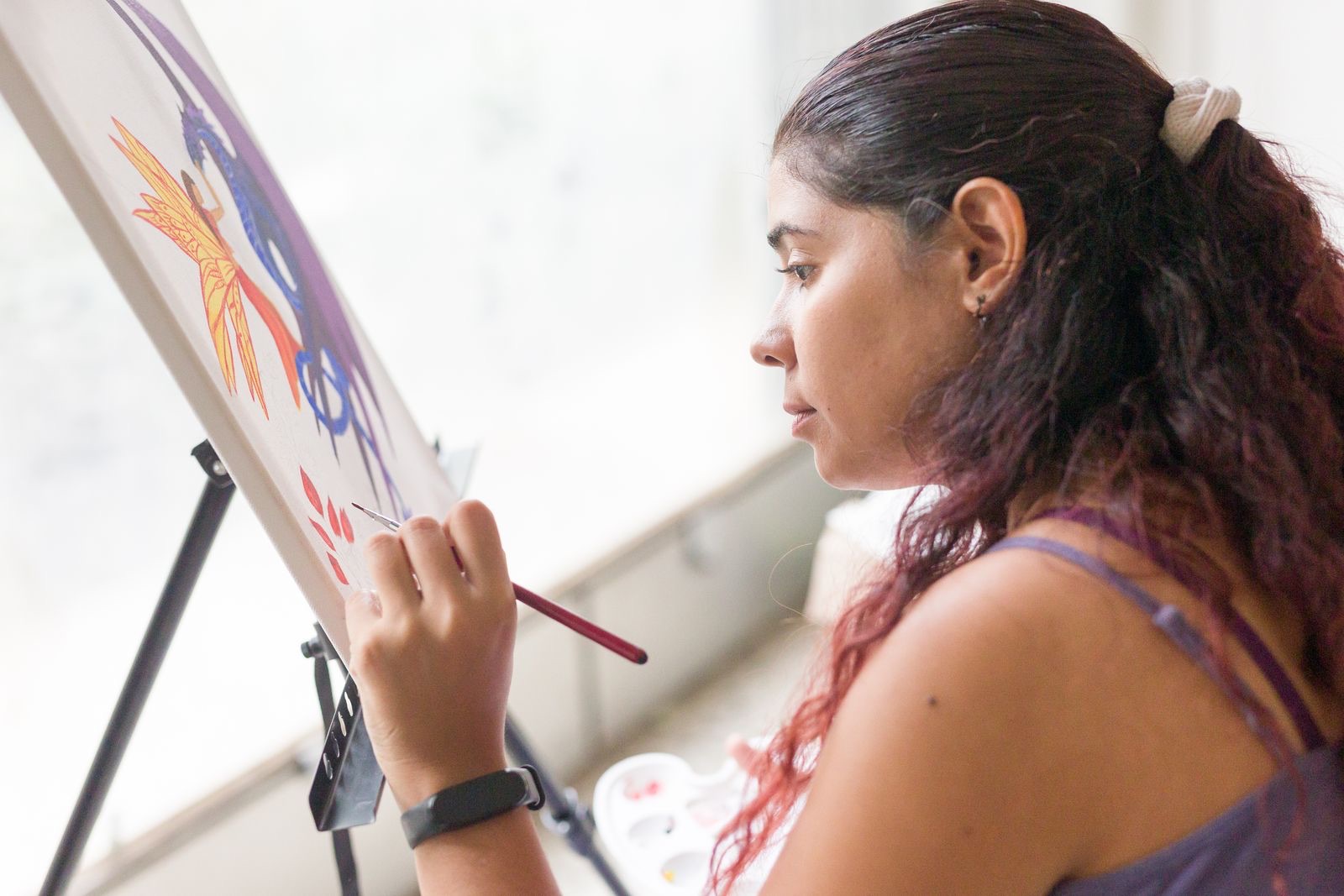
“Will art pay the bills?” is a question many students who love painting or sculpting hear at home, and often ask themselves. The honest answer is that a fine arts career rewards skill, persistence and a strong body of work, and a good degree helps you build all three. If you are weighing a Bachelor of Fine Arts, these BFA course details cover eligibility, admission, the syllabus, specialisations and the careers graduates pursue, so you can decide with clear eyes.
What is a BFA course?
A Bachelor of Fine Arts is an undergraduate degree in the visual arts. Its purpose is to develop you as a practising artist: someone who can observe closely, handle materials with skill and express ideas through visual work. Depending on the university, a BFA runs for three or four years. Most teaching happens in studios, through hands-on practice, demonstrations and critiques, supported by classes in art history and theory. Assessment usually relies on portfolios, juries and exhibitions as well as written work.
BFA eligibility criteria
Class 12 requirements. Most universities ask for a pass in Class 12 (PUC or equivalent) with a minimum aggregate, and many accept students from any stream. Minimum marks differ between universities, so check each programme page.
Creative aptitude. Marks alone rarely decide a BFA admission. Universities want evidence that you can draw, observe and think visually, so regular sketching and a small body of finished work matter as much as your board result.
At Presidency University, the Bachelor of Fine Arts (BFA) is a three-year, six-semester programme open to students who have passed Class 12, PUC or an equivalent examination. Confirm the current minimum marks with the admissions team before applying.
BFA admission process
Admission routes vary, and many universities combine more than one:
- Merit: Admission based on Class 12 marks, sometimes with a minimum score in the qualifying exam
- Entrance tests: Some central universities use the CUET-UG, while others run their own written or aptitude test
- Practical rounds: On-the-spot drawing, colour or clay modelling tests to assess hand skills
- Portfolio and interview: A review of your best work and a conversation about your interests and influences
Start preparing a portfolio in Class 11 or 12. Include observational drawings, colour studies and a few complete pieces, and show your process, not only polished results.
BFA subjects and syllabus
A BFA usually moves from foundation to specialisation to independent practice.
Foundation studies. Drawing from objects, nature and life, colour and mediums, the elements and principles of art and two- and three-dimensional form.
Studio practice. Increasingly independent work in your chosen discipline, guided by faculty critiques, with projects that build towards a coherent body of work.
Art history and theory. Indian and global art history, aesthetics and art criticism, which help you understand where your work sits and how to write about it.
As an example, Presidency University’s published curriculum begins with Colours and Mediums, Object and Nature Study, Elements and Principles, Space and Structure, Life Study and Creative Visualization. Later semesters add Indian Art History, Global Art History, Art and Aesthetics, Basic Digital Skills, Technology and New Media Practice, and Curatorial Practice and Art Criticism. The final year includes a residency, a major project and an exhibition.
BFA specialisations
Specialisation | What you study | Typical outcomes |
Painting | Drawing, colour, composition, traditional and contemporary techniques | Studio practice, illustration, art education |
Sculpture | Modelling, carving, casting, assemblage, installation | Public art, installation, set and prop work |
Applied art | Visual communication, typography, illustration, advertising design | Agencies, publishing, brand design |
Printmaking | Woodcut, linocut, etching, screen printing | Studio practice, editions, textile and surface design |
Photography | Camera practice, lighting, image-making and editing | Editorial, documentary and fine art photography |
Digital arts | Digital painting, new media, motion and interactive work | Concept art, multimedia, digital illustration |
Not every university offers every specialisation. Presidency University’s BFA offers two tracks, Painting and Sculpture, from the second year, with printmaking built into the curriculum and electives from multimedia and design.
Skills developed
A BFA develops observation, technical skill across materials, visual communication and the discipline of regular practice. You learn to take criticism, explain your work in words and plan projects from idea to exhibition. Above all, you graduate with a portfolio: the evidence galleries, employers and postgraduate programmes ask to see.
Career options after BFA
- Creative practice: Independent artist, painter, sculptor, printmaker or installation artist
- Illustration and visual work: Illustrator, concept artist, visual or multimedia artist
- Galleries and museums: Curatorial assistant, gallery coordinator, exhibition designer or art handler
- Film, events and media: Set and prop design, art direction support
- Education: Art teacher or, after higher studies, academic roles
- Freelance and enterprise: Commissions, workshops, an online shop or your own studio
Many artists combine several of these, especially early on. Some roles, such as art conservation, need further specialised training. If you lean towards commercial visual work, compare the BFA with design courses after 12th, which focus on solving problems for users and clients.
Higher studies. A Master of Fine Arts (MFA) deepens your practice and is usually needed for university teaching. Some graduates move into art history, curatorial studies or design at master’s level.
How to choose a BFA programme
- Studios: Visit if you can. Check space, light, equipment and access outside class hours.
- Faculty: Look at the teachers’ own practice and exhibitions.
- Exhibitions: Ask how often students show work, and whether there is a final-year show.
- Industry exposure: Ask about internships, residencies, gallery visits and visiting artists.
- Duration and cost: Compare three- and four-year programmes, fees and material costs.
Frequently asked questions
Who is eligible for a BFA course?
Students who have passed Class 12 or an equivalent examination, usually from any stream, with the minimum marks the university sets. Many universities also assess drawing ability.
Is an entrance exam required for BFA admission?
It depends on the university. Some admit on merit, some use CUET-UG or their own entrance test, and many add a practical test, portfolio review or interview.
What subjects are taught in BFA?
Drawing, colour, life study, composition, two- and three-dimensional form, art history and aesthetics, followed by specialised studio work and a final project or exhibition.
Do I need a portfolio to apply for BFA?
Not always, but a portfolio of observational drawings and finished work strengthens any application and is often requested during interviews or practical rounds.
What career options are available after BFA?
Studio practice, illustration, concept art, gallery and museum roles, set and prop design, art education and freelance work, with further options after an MFA.
Conclusion
A BFA suits students who want to make art seriously and are ready for years of disciplined practice. Shortlist programmes by specialisation and studio quality, check eligibility and admission tests for your intake, and start building a portfolio now. Explore the BFA and other programmes at the School of Design at Presidency University.


 +91 9022092222
 admission@presidencyuniversity.in
 Rajanukunte, Yelahanka, Bengaluru, Karnataka, Pin: 560119, India

 +91 9022092222