
ABOUT PRESIDENCY UNIVERSITY
Presidency University, Bengaluru, is a leading NAAC ‘A’ accredited state private university, known for its strong commitment to academic excellence, research, and innovation. Established in 2015 by the Presidency Group of Institutions, which carries a rich legacy of over 50 years in the field of education, the University has rapidly emerged as a preferred destination for higher learning in India.
The University offers over 70+ programmes across disciplines such as computer science, engineering, management, commerce, law, design, media studies, liberal arts, and allied health sciences, serving a vibrant community of more than 23,000 students. Its Engineering and Management programmes are NIRF-ranked, and the University is also globally recognised as a THE-ranked institution. The university is committed to providing interdisciplinary-centric, outcome-based education through a combination of theoretical knowledge, applied science, and experiential learning processes.
ABOUT THE PARTNER INSTITUTIONS
University of Visvesvaraya College of Engineering (UVCE)
University of Visvesvaraya College of Engineering (UVCE) is a state autonomous institution of eminence modelled in lines with IITs and other institutions of national importance. It was established in the year 1917 by Bharat Ratna Sir M Visvesvaraya and was the fifth engineering college to be started in India. UVCE offers eight undergraduate programmes, twenty-four Post graduate programmes, MSc (Engineering) and Ph.D programmes.
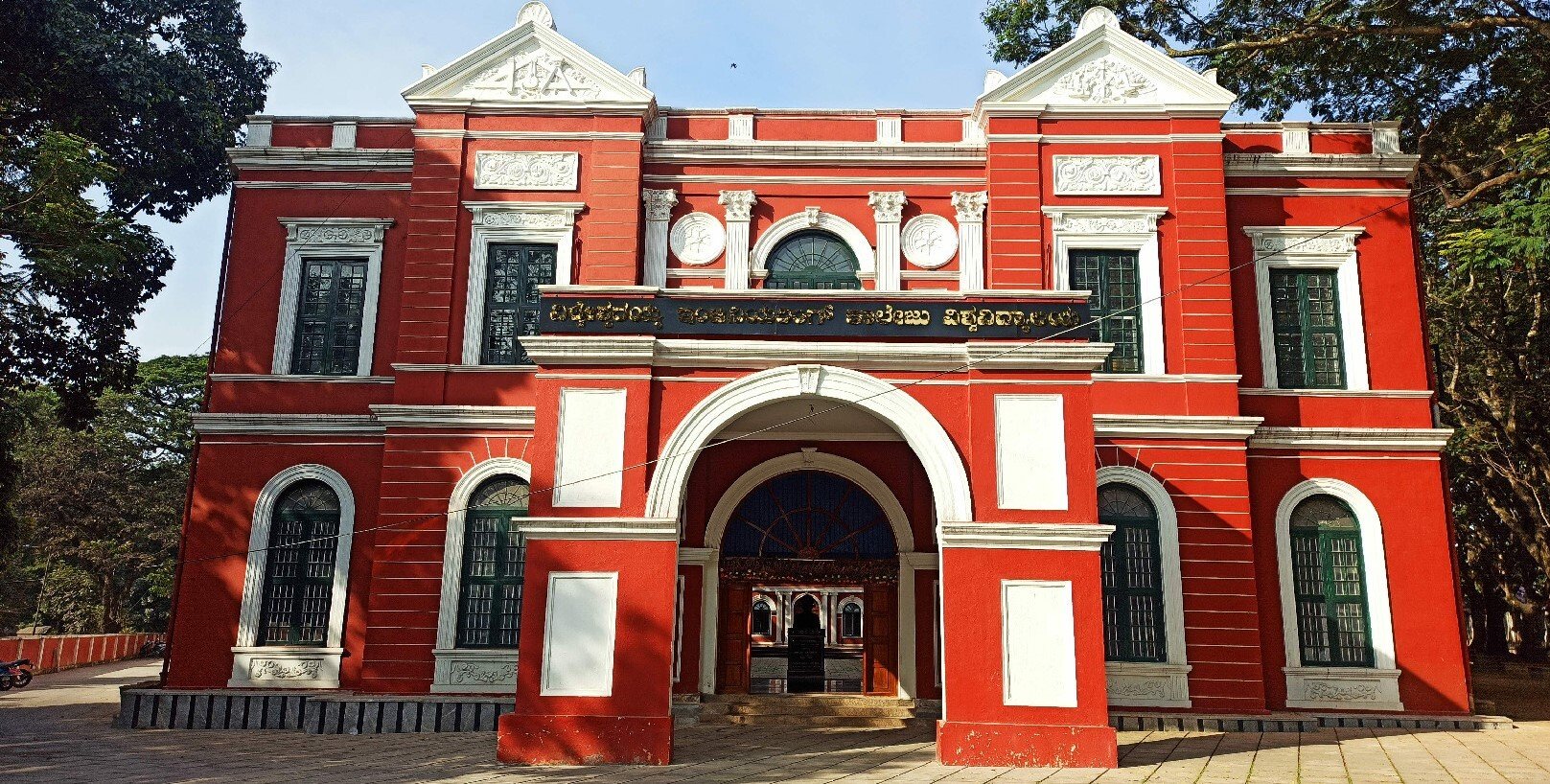
The undergraduate programmes are Civil Engineering, Mechanical Engineering, Electrical and Electronics Engineering, Electronics and Communication Engineering, Computer Science Engineering, Information Science Engineering, Artificial Intelligence and Machine Learning and Architecture. The institute currently has over 3300 students spread across two campuses - the main campus situated at KR Circle, in the neighbourhood of Vidhana Soudha, while the other is situated amidst Jnana Bharati Campus spread over 50 acres. University of Visvesvaraya College of Engineering
Kagoshima University, Japan
Kagoshima University, located in Kagoshima, Japan, is a national university offering education and research across a broad range of disciplines. The University was established in 1949 and comprises faculties in Humanities and Social Sciences, Education, Science, Medicine, Dentistry, Engineering, Agriculture, Veterinary Medicine and Fisheries, supported by graduate schools and interdisciplinary research facilities.
Kagoshima University has been an important partner in the Indo-Japan academic collaboration underlying the ISCI series. The 1st International Symposium on Collaborative Informatics (ISCI 2025) was hosted at Kagoshima University in March 2025, and faculty members from the University continue to contribute to the academic coordination of the symposium. Kagoshima University | Faculty of Engineering
Kurume Institute of Technology, Japan
Kurume Institute of Technology (KIT) is a private university located in Kurume, Fukuoka, Japan, established in 1976. The University is focused on engineering and technology education, with an emphasis on practical learning, innovation and the development of engineers equipped to address contemporary technological and societal challenges.
KIT offers undergraduate education through its Faculty of Engineering, covering areas such as mechanical systems, transportation and automotive engineering, architecture and building services, information and network engineering, and engineering education and creation. Kurume Institute of Technology has been an active partner in the Indo-Japan academic collaboration and the ISCI series, contributing to international academic interaction and research exchange between participating institutions. Kurume Institute of Technology – Official Website
ABOUT THE SYMPOSIUM
The 3rd International Symposium on Collaborative Informatics (ISCI 2026) is an international multidisciplinary symposium being jointly organised by the University of Visvesvaraya College of Engineering (UVCE), Bengaluru and Presidency University, Bengaluru, in association with Kagoshima University, Japan and Kurume Institute of Technology, Japan.
Building upon the academic interactions and collaborative momentum established through previous joint symposia between India and Japan, ISCI 2026 aims to provide an international platform for researchers, academicians and industry professionals to exchange ideas, present emerging research and strengthen academic and research collaborations
The symposium welcomes contributions across multiple disciplines and encourages interdisciplinary research involving emerging technologies, engineering applications, artificial intelligence, informatics, sustainability and digital technologies.
SCOPE OF ISCI 2026
ISCI 2026 provides a multidisciplinary platform for researchers, academicians, research scholars and professionals to present original research, exchange ideas and explore collaborative opportunities across diverse domains of informatics and its applications.
The symposium encourages contributions that connect technology, computation, data and informatics with applications across different domains.
The symposium welcomes contributions that address emerging technologies, interdisciplinary applications, innovative methodologies and collaborative solutions to contemporary challenges in science, engineering, healthcare, agriculture, sustainability and other sectors.
SYMPOSIUM THEMES
The symposium welcomes original, unpublished research contributions in the following broad areas:
- Mathematics and Informatics Mathematical foundations of information science, including type theory, mathematical logic, program theory and verification, algorithms, information theory, coding theory, cryptology and related areas.
- Biological Cognitive Informatics
Development of computing systems aligned with human cognitive processes to enable seamless human–system interaction. - Engineering Informatics
Application of computational tools, data-driven methods and digital technologies across all branches of engineering, including civil, structural, mechanical and electrical engineering, with emphasis on sustainability, sustainable materials and environmentally responsible engineering practices. - Intelligent Informatics
Neural networks, fuzzy logic, evolutionary optimization, rough sets, data mining, web intelligence and related computational paradigms. - Modern Informatics
Artificial intelligence, Internet of Things (IoT), e-surveillance, electronic security systems and other emerging technologies. - Medical and Nursing Informatics
Healthcare data systems, electronic health records, clinical data processing, healthcare analytics and information management for patient care. - Agriculture Informatics
ICT applications in agriculture, information systems, data processing and innovations in food and environmental systems. - Aquaculture Informatics
Applications of information technology for improving productivity, sustainability and economic viability in aquaculture. - Geo-informatics
GIS, GPS, cartography, photogrammetry, geospatial analysis and applications of information science to earth systems. - AI and Machine Learning Applications Applications of artificial intelligence and machine learning across science, engineering, management, healthcare, social sciences, humanities and other domains.
- Prof. Chethan K, Associate Professor, Department of Civil Engineering, University of Visvesvaraya College of Engineering, Bengaluru
- Prof. Nakul R, Deputy Director – Office of International Affairs, Professor & Head, Department of Civil Engineering, Presidency University, Bengaluru
- Prof. Katta Venkataramana, Professor (Retired), NITK Surathkal, India, Former Associate Professor, Kagoshima University, Japan
- Prof. Toshinobu Yamaguchi, Professor, Department of Ocean Civil Engineering, Kagoshima University, Japan
- Prof. Tomonori Saita, Associate Professor, Department of Ocean Civil Engineering, Kagoshima University, Japan
- Prof. Shuichi Torii, Special Professor, Department of Mechanical Systems Engineering, Kurume Institute of Technology, Japan
Organizing Committee – UVCE
- Dr. M. Shantharaja, Professor – Mechanical Engineering, UVCE
- Dr. H C Muddaraju, Associate Professor – Civil Engineering, UVCE
- Dr. Dharmendra Chouhan, Associate Professor - CSE, UVCE
- Dr. Madhusudhana J, Associate Professor – EEE, UVCE
- Dr. Kiran K, Associate Professor – ECE, UVCE
Organizing Committee – Presidency University
- Dr. V Joshi Manohar, Associate Dean – First Year Engineering; Professor & Head – EEE
- Dr. Rajiv Ranjan Singh, Professor & Head – ECE
- Dr. Pallavi R, Professor & Head – CSE
- Dr. Satish Babu Boppana, Professor & Head – Mechanical Engineering
- Dr. Shilpa N, Professor & Head – Mathematics
- Mr. Gopalakrishnan N, Assistant Professor – Civil Engineering
Call for Papers
Researchers, academicians, research scholars and students are invited to submit original and unpublished research contributions related to the symposium themes.
Abstract Submission
Authors are invited to submit a 150–200 word abstract describing the scope, methodology and key contributions of the proposed work.
The abstract should include:
- Title of the paper
- Name, Designations, Affiliations, Contact numbers and Email addresses of all authors
- Brief description of the scope
- Methodology
- Key contributions
Deadline: 15 October 2026
Full Paper Submission
Detailed formatting and submission instructions will be provided to authors along with the abstract acceptance communication.
At least one author of each accepted paper must register for the symposium and present the work.
Presentations may be made in person or online.
Full Paper Submission Deadline: 10 November 2026
|
Abstract Submission Opens |
September 15, 2026 |
|
Last Date for Abstract Submission |
October 15, 2026 |
|
Notification of Abstract Acceptance |
October 25, 2026 |
|
Full Paper Submission |
November 10, 2026 |
|
Early Bird Registration |
November 15, 2026 |
|
Registration Deadline |
November 20, 2026 |
|
Symposium |
30 November – 01 December 2026 |
Participants whose abstracts are accepted are required to complete registration for the symposium.
|
Category |
Early Bird Registration (On or before Nov 15, 2026) |
Regular Registration (After Nov 15, 2026) |
|
Faculty Members / Research Scholars (India) |
₹3,000/- |
₹3,500/- |
|
UG / PG Students (India) |
₹2,000 |
₹2,250/- |
|
International Participants |
$75 |
$80 |
Registration Link: Will be communicated after acceptance of the abstract.
Registration fee includes
- Conference / registration kit
- Lunch during symposium days
Registration deadline: 25 November 2026
Publication Details
Symposium Proceedings
Abstracts of all accepted papers presented at the Symposium will be included in the ISCI 2026 Symposium Proceedings / Book of Abstracts, with an ISBN.
Full Paper Submission and Double-Blind Peer Review
Authors of accepted abstracts will be invited to submit their full papers through Microsoft CMT. All submitted full papers will undergo a double-blind peer-review process. Detailed submission guidelines and the CMT submission link will be made available to authors of accepted abstracts.
Full Paper Submission Deadline: 10 November 2026
Publication Opportunity
Selected high-quality papers will be considered for publication in a Scopus-indexed peer-reviewed academic book series or journal, subject to peer review, editorial evaluation and acceptance by the respective publisher.
The Microsoft CMT service was used for managing the peer-reviewing process for this conference. This service was provided for free by Microsoft and they bore all expenses, including costs for Azure cloud services as well as for software development and support.
Sponsors
Sponsorship opportunities are available for ISCI 2026.
Become a Sponsor / Sponsorship Enquiry Email to isci2026.uvce@gmail.com
Contact Details
For Symposium Enquiries
Dr. Nakul R
Presidency University, Bengaluru
Mobile: +91 9632349550
hod_civ@presidencyuniversity.in
Dr. Chethan K
University of Visvesvaraya College of Engineering, Bengaluru
Mobile: +91 9980003961
chethank@uvce.ac.in
Email id for all symposium-related communications: isci2026.uvce@gmail.com
Dr. Nakul R
Presidency University, Bengaluru
Mobile: +91 9632349550
hod_civ@presidencyuniversity.in
Dr. Chethan K
University of Visvesvaraya College of Engineering, Bengaluru
Mobile: +91 9980003961
chethank@uvce.ac.in
Email id for all symposium-related communications: isci2026.uvce@gmail.com


 +91 9022092222
 admission@presidencyuniversity.in
 Rajanukunte, Yelahanka, Bengaluru, Karnataka, Pin: 560119, India
 +91 9022092222