B.Tech Subjects: Year-Wise Syllabus and Specialisations
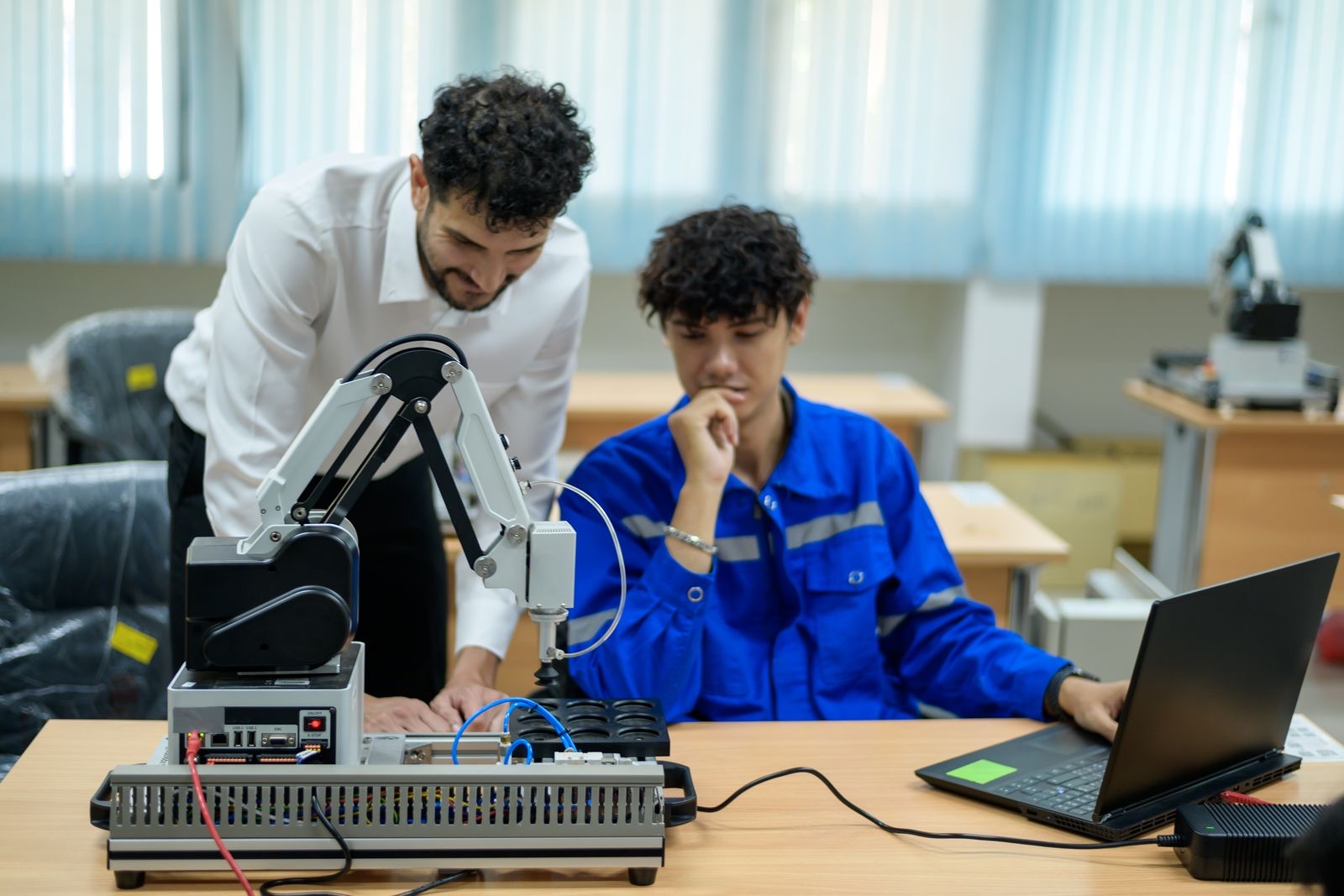
Many Class 12 students who choose engineering worry less about the four years than about the first semester. Will it be all mathematics? When does the real branch begin? Why does a computer science student study chemistry? Knowing the B.Tech subjects year by year answers these questions and helps you pick a branch with open eyes. This guide uses the published curricula of Presidency University’s B.Tech programmes as worked examples; other universities follow a similar pattern with their own course names.
B.Tech course structure
A B.Tech is a four-year, full-time degree divided into eight semesters. Presidency University’s B.Tech regulations state that a minimum of 160 credits is required for the degree, in line with AICTE guidelines. Credits come from different groups, or baskets, of courses. The table shows how the B.Tech Computer Science and Engineering regulations divide them.
Course basket | Credits (B.Tech CSE) | What it covers |
Basic science | 24 | Mathematics, physics and chemistry |
Engineering science | 23 | Electrical basics, graphics, programming and design |
Humanities, social sciences and management | 9 | Communication, ethics and finance |
Professional core | 64 | Compulsory branch subjects |
Professional electives | 18 | Branch subjects you choose |
Open electives | 6 | Courses from other disciplines |
Project work | 16 | Internship, mini project and capstone project |
The regulations add that practical and skill-based courses make up about 61% of the 160 credits. Other branches use the same structure with different core subjects.
First-year B.Tech subjects
The first year builds the foundations every engineer needs, so subjects are broadly common across branches. In CSE and its allied branches, students are split into a physics cycle and a chemistry cycle: one group studies physics in the first semester and chemistry in the second, and the other group does the reverse. Branches such as ECE, EEE, mechanical and civil take chemistry in the first semester and physics in the second.
Typical first-year subjects at Presidency include:
- Calculus and Differential Equations, followed by Probability and Statistics or transform techniques
- A physics course, such as Optoelectronics and Quantum Physics, and a chemistry course, such as Chemistry of Smart Materials, each with a lab
- Basics of Electrical and Electronics Engineering, with a lab
- Engineering Graphics and a Design Workshop
- Computational Thinking using Python in CSE, ECE and EEE, plus Problem Solving using C in computing branches
- English for Technical Communication, Indian Constitution and Environmental Studies
Mechanical engineering students also take Workshop Practice and Engineering Mechanics in the first year, and meet programming in the second year instead.
Second-year subjects
The second year is where your branch takes over. Each theory subject is usually paired with a laboratory course.
In B.Tech CSE, semesters three and four cover Data Structures, Object Oriented Programming using Java, Computer Organization and Architecture, Data Communication and Computer Networks, Discrete Mathematics, Database Management Systems, Analysis of Algorithms and Essentials of AI. In B.Tech ECE, the same year brings Signals and Systems, Network Theory, Analog Communication, Digital Signal Processing, Electromagnetic Field Theory, Control Systems, Linear Integrated Circuits and Embedded Systems using Microcontrollers.
Third-year subjects
The third year deepens the core and introduces electives. CSE students study Theory of Computation, Operating Systems, Machine Learning Techniques, Cryptography and Network Security, Cloud Computing and Mobile Application Development, and begin their professional electives and an open elective.
In CSE, this is also when the first internship comes. Presidency’s CSE regulations provide for an internship, in-plant training or certified skill-based programme of at least four weeks during the break between the fourth and fifth semesters, and the curriculum lists it in the fifth semester. Branches such as ECE, mechanical, civil and EEE list their internship in the seventh semester instead, and include a minor project in the third year.
Final-year subjects
The final year is mainly about specialisation and independent work. In the CSE curriculum, the seventh semester consists of professional electives, an open elective, interview preparation and a mini project, and the eighth semester is a capstone project. In ECE, the seventh semester covers Microwave Antenna and Wave Propagation, Data Communication and Networking, electives and an internship, before the capstone project in the eighth.
Subjects by B.Tech specialisation
Branch | Examples of core subjects |
Computer Science and Engineering | Data Structures, Algorithms, Database Management Systems, Operating Systems, Computer Networks, Machine Learning, Cloud Computing |
Electronics and Communication | Signals and Systems, Analog and Digital Communication, Digital Signal Processing, CMOS VLSI Design, Embedded Systems, Microwave Antennas |
Mechanical | Thermodynamics, Fluid Mechanics and Machinery, Mechanics of Solids, Theory of Machines, Heat and Mass Transfer, Finite Element Analysis, Mechatronics |
Civil | Strength of Materials, Surveying, Geotechnical Engineering, Structural Analysis, Design of RCC and Steel Structures, Quantity Surveying, Building Information Modelling |
Electrical and Electronics | Network Theory, DC and AC Machines, Control Systems Engineering, Power Electronics, Transmission and Distribution, Power System Analysis, Electrical Drives |
You can see the full semester lists on the programme pages for B.Tech Mechanical, B.Tech Civil and B.Tech EEE. If you are deciding between related branches, read our comparisons of CSE vs ECE and ECE vs EEE, or our overview of the core branches of engineering.
Practical learning
Practical work runs through all four years:
- Labs: most core theory subjects have a matching lab, from physics and electrical basics to data structures, embedded systems or surveying
- Design and minor projects: a Design Workshop in the first year and a minor or mini project later let you build something with a team
- Internship: in industry, a research institution or an approved skill programme; the curriculum places it in the fifth semester in CSE and in the seventh in branches such as ECE, mechanical, civil and EEE
- Capstone project: a final-year project in which you define a problem, design a solution and present your results
How to prepare for B.Tech subjects
1. Strengthen your Class 12 base. Revise calculus, vectors, mechanics and electricity before the first semester. Most first-year difficulty comes from gaps here.
2. Practise every week. Engineering mathematics and circuit problems reward regular practice far more than last-minute revision. In computing subjects, write small programs often.
3. Learn through projects. Build one small project each semester, document it clearly and keep your code or design files organised. Projects help you connect subjects that seem separate in the timetable.
4. Read the syllabus early. Look at next semester’s subjects in advance so that new topics feel familiar.
Frequently asked questions
What subjects are taught in the first year of B.Tech?
Mathematics, physics, chemistry, basic electrical and electronics engineering, engineering graphics and communication skills, with programming in most branches. These are largely common across branches.
Are B.Tech subjects the same in every specialisation?
Broadly, only in the first year, and even then a few courses differ by branch. From the second year, each branch follows its own core subjects and electives.
How many semesters are there in B.Tech?
Eight semesters over four years.
When do B.Tech students begin specialisation subjects?
Branch core subjects start in the third semester. Professional electives usually begin in the third year and dominate the final year.
Does B.Tech include internships and project work?
Yes. Presidency’s CSE curriculum, for example, includes an internship of at least four weeks after the fourth semester, a mini project and a capstone project.
Subjects tell you what you will study; your interests tell you which branch you will enjoy. Compare semester-wise curricula before choosing, and if you are still weighing degree types, read our guide on B.E. vs B.Tech. For career outcomes after computing branches, see jobs after B.Tech CSE, and explore all engineering programmes at the Presidency School of Engineering.


 +91 9022092222
 admission@presidencyuniversity.in
 Rajanukunte, Yelahanka, Bengaluru, Karnataka, Pin: 560119, India

 +91 9022092222