Think Law Is Just Courtrooms and Black Coats? Think Again.
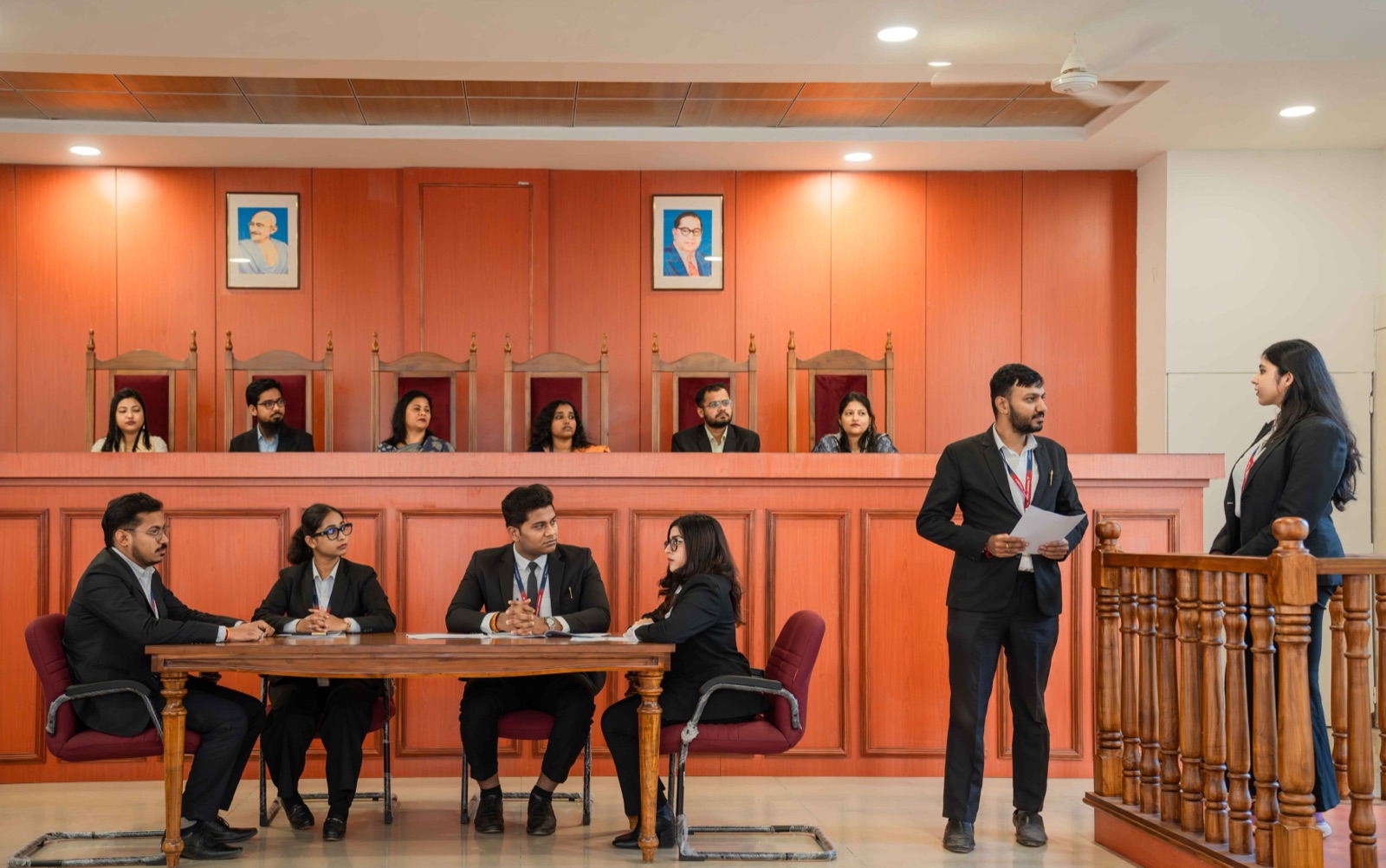
Most people picture a lawyer arguing in court. That’s one career, and a good one. But the same degree also leads to boardrooms, tech companies, policy teams and research desks. Law has quietly become one of the most flexible courses you can pick after 12th.
How does the course work?
At the Presidency School of Law, the undergraduate route is a five-year integrated honours programme, so you start law right after school. You can choose:
- B.A. LL.B. (Hons.): law combined with political science, sociology and economics
- B.B.A. LL.B. (Hons.): law combined with business and management
Eligibility is 10+2 with at least 45% aggregate, and admission is through CLAT, LSAT or the university’s own Presidency Admission Test (PAT). After the integrated degree, there’s a one-year LL.M. and a Ph.D. in Law.
Pick a direction
In the later years of the B.A. LL.B., you choose an honours track:
- Corporate and Commercial Law
- Criminal Law
- Constitutional and Administrative Law
- Technology and Intellectual Property Law
- International Trade Law
The LL.M. is also specialised, with options in IPR and Technology Law, Constitutional and Administrative Law, Corporate Law, Criminal Law and International Law.
Where can it take you?
The programme page lists careers such as advocate, corporate lawyer, legal advisor, judicial services, public prosecutor, JAG officer in the armed forces, legal researcher, human rights advocate, policy consultant and legal analyst. After the LL.M., teaching, research and in-house counsel roles open up too.
What’s new in the school
- The syllabus keeps pace with the law. India’s new criminal codes, the Bharatiya Nyaya Sanhita, the Bharatiya Nagarik Suraksha Sanhita and the Bharatiya Sakshya Adhiniyam, which replaced the IPC, CrPC and Evidence Act in July 2024, are taught as core subjects.
- Electives and honours papers cover Artificial Intelligence and Law, Cyber Law, Data Protection and Data Privacy Law, Sports Law and Financial Technology Law.
- In February 2026 the school hosted its 1st International Moot Court Competition, in collaboration with the National Human Rights Commission.
- Students are winning outside the campus too. In March 2026, a team finished as first runners-up at the 2nd TNNLU National Insolvency Moot Court Competition, and a student won Best Student Advocate at the 8th Surana & Surana–KLE Constitutional Law Moot Court Competition.
- Coming up in November: a regional conference on the rights of senior citizens (13 Nov), an international conference on law, justice and inclusive governance (19 Nov), and Decoding Boardroom Dynamics 2.0, a boardroom simulation and NCLT trial competition (21 and 22 Nov).
Topics that make law interesting
- Who is responsible when an AI system makes a costly mistake?
- Where does your right to privacy end online?
- What happens when sport, money and the law meet?
- How do courts settle a company’s collapse, and who gets paid first?
Is law right for you?
If you enjoy debate, reading, solving problems and standing up for a point of view, give it a serious look. The course asks for patience, and in return it offers a wide choice of careers.
FAQs
How long is the integrated law course? Five years.
Which entrance exams are accepted? CLAT, LSAT or the Presidency Admission Test (PAT).
Does the course include practical training? Yes. It includes moot courts, internships, legal aid clinics, workshops and courtroom exposure.
How long is the LL.M.? One year.
For eligibility and admissions, visit the Presidency School of Law page on presidencyuniversity.in.


 +91 9022092222
 admission@presidencyuniversity.in
 Rajanukunte, Yelahanka, Bengaluru, Karnataka, Pin: 560119, India

 +91 9022092222